
How to Film Hospitality in a Way That Sells the Experience
How to Film Hospitality in a Way That Sells the Experience
Hospitality video isn't really about selling a hotel, resort, restaurant, or destination. It's about selling the experience of being there.
That's what makes hospitality and travel video production different from many other forms of commercial filmmaking.
When you're selling a physical product, the audience can evaluate the product itself. They can see it, hold it, use it, and understand what they're getting.
Hospitality is different.
You're asking someone to imagine a future experience.
What will it feel like to wake up there?
What will dinner be like?
What will the room feel like?
What will it be like to sit by the pool, explore the destination, or spend time with the people they're traveling with?
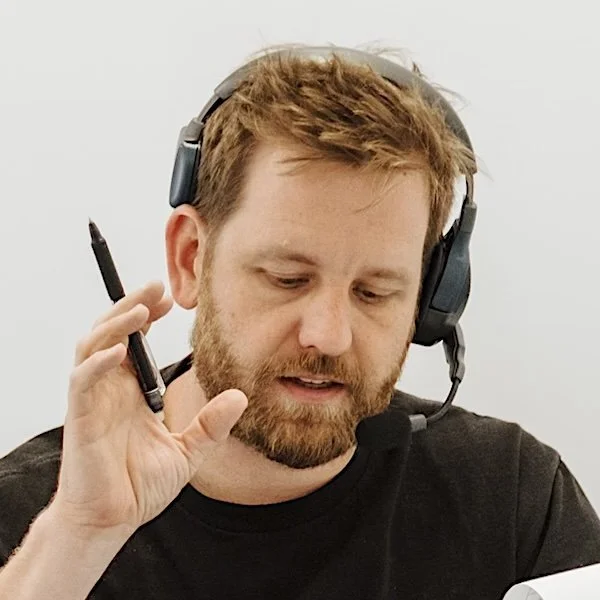
For director Micah Taylor, that idea is central to creating engaging hospitality video.
Rather than simply documenting a location, the goal is to create a visual experience that allows the viewer to imagine themselves inside it.
Sell the Memory, Not Just the Destination
One of the most interesting ideas Micah brings to hospitality filmmaking is the idea that, in some ways, you're still selling something tangible.
Think about how people remember vacations.
Often, it's a photograph.
A particular moment. A meal. A view. A person laughing. A beautiful room. A sunset.
That single image can become a representation of an entire trip.
When someone looks at it years later, it doesn't just show them what the destination looked like. It brings back how they felt when they were there.
That is the opportunity for hospitality video.
The production should create those moments — the visual snapshots that allow someone watching the video to begin imagining their own experience.
There are three important elements Micah considers when approaching this type of production:
1. Casting: Give the Audience Someone to Identify With
Casting is one of the most important parts of hospitality video production.
If the goal is to make someone imagine themselves at a resort, restaurant, hotel, or destination, the people in the video need to feel relatable to the intended audience.
They need to look like they belong there.
More importantly, they need to feel natural there.
The audience shouldn't be thinking about the fact that they're watching actors in a commercial.
They should be thinking:
"That looks like something I would do."
"I want to be there."
"That could be my vacation."
This is why casting isn't simply about finding attractive people.
It's about finding the right people for the brand, the destination, and the audience.
The right cast can transform a beautiful location from something interesting to something aspirational.
2. Lens Choice: Don't Just Show the Space
One of the most intuitive approaches to hospitality filmmaking is to reach for a wide lens.
And it makes sense.
Hotels, resorts, restaurants, and destinations are often visually impressive, so why wouldn't you want to show as much of the environment as possible?
Wide shots are important.
But relying on them exclusively can create a problem: the viewer sees the location without necessarily experiencing it.
Micah's approach is to use tighter lenses to create a more curated version of reality.
Instead of only showing the entire restaurant, show the details of the meal.
Instead of only showing the hotel room, show the textures, materials, light, and small details that make the space feel special.
Instead of simply showing someone sitting beside a pool, get closer to the expression, the movement, the water, and the interaction.
These tighter shots give the audience something to feel.
They allow the filmmaker to control exactly what the viewer notices.
The result is a more immersive visual experience.
Wide Shots Establish. Details Sell the Experience.
The strongest hospitality productions generally need both.
Wide shots establish the location.
Medium shots establish the people.
Tighter shots establish the experience.
The combination creates a visual language that feels much more intentional than simply moving from one beautiful wide shot to another.
3. Sound: Let the Audience Hear the Experience
This is perhaps one of the most overlooked elements of hospitality video production.
Sound.
It's easy to spend hours selecting the right music, building a beautiful edit, and finding the perfect voiceover.
But if the only sound the audience hears is music and narration, you're leaving an enormous storytelling tool on the table.
Real production sound can make a viewer feel physically present.
The sound of a restaurant.
A glass being set on a table.
Water moving through a pool.
Footsteps through a hotel.
Conversation and laughter.
Wind.
Nature.
The ambient sounds of a destination.
These details don't necessarily need to be obvious.
Sometimes they're barely noticeable.
But they contribute to the feeling that the viewer is actually inside the scene rather than simply watching an advertisement.
Music can create emotion.
Narration can communicate information.
Production sound creates presence.
That's an important distinction.
Hospitality Video Should Create Desire
The ultimate goal of hospitality marketing isn't simply to demonstrate that a destination is beautiful.
Most luxury destinations already have beautiful photographs.
The challenge is creating enough emotional connection that someone begins to picture themselves there.
That's why effective hospitality video often feels less like a traditional advertisement and more like a window into another experience.
You're not saying:
"Here's our hotel."
You're saying:
"Imagine yourself here."
That shift changes almost every production decision.
It affects casting.
It affects lens selection.
It affects lighting.
It affects camera movement.
It affects editing.
And it affects sound design.
Every element should contribute to the same objective: making the audience feel like they are already experiencing the destination.
The Role of the Production Company
At Kings & Queens Productions, this is the kind of thinking we want to bring to commercial video production.
The goal isn't simply to make something cinematic.
Cinematic visuals are a tool.
The real question is what those visuals are supposed to accomplish for the brand.
For hospitality, that often means creating desire and emotional connection.
That requires more than beautiful locations and expensive cameras. It requires understanding the audience, identifying the experience the brand is selling, and building a production around that idea.
It's also why having access to a network of specialized directors, cinematographers, producers, and post-production partners is so valuable.
Different industries require different creative approaches.
And even within hospitality, every brand has its own identity, audience, and experience to communicate.
Final Takeaway
If you're producing video for a hotel, resort, restaurant, tourism organization, or luxury travel brand, start by asking a simple question:
What do we want the audience to imagine themselves experiencing?
Once you know that, the production decisions become much clearer.
Cast people the audience can identify with.
Use lenses that capture both the destination and the details.
Capture the sounds that make the environment feel real.
And most importantly, don't just show people where they could go.
Give them a glimpse of what it could feel like to be there.
About Micah Taylor
Micah Taylor is a director within the Kings & Queens Productions creative network. In this episode of our Industry-Specific Filmmaking series, Micah shares his approach to creating engaging video for travel, tourism, and luxury hospitality brands.
About Kings & Queens Productions
Kings & Queens Productions is a commercial video production company based in Greenville, South Carolina, working with brands and agencies across the United States.
We provide commercial video production, creative direction, production services, and access to a network of producers, directors, cinematographers, and post-production partners.
Looking for a production partner for your next hospitality or travel campaign? Let's talk.

Industry-Specific Filmmaking: Why Every Brand Needs a Different Visual Strategy
Industry-Specific Filmmaking: Why Every Brand Needs a Different Visual Strategy
There isn't one formula for great commercial video.
A hospitality brand doesn't need the same type of video as a fitness company. A food and beverage brand has different visual challenges than a corporate organization. And a lifestyle campaign may require an entirely different approach from a traditional corporate video.
That's the idea behind our new Industry-Specific Filmmaking series at Kings & Queens Productions.
Over the next several weeks, we're talking with directors and directors of photography from our creative network about how they approach different types of commercial video production.
Why Industry Matters in Commercial Video
One of the easiest mistakes a brand can make is assuming that a good video formula can simply be replicated across industries.
It can't.
The way you visually communicate a luxury hotel is fundamentally different from the way you communicate a manufacturing company.
The goal of commercial production isn't simply to make something that looks good.
It's to create visuals that communicate the right message to the right audience in the right way.
That requires understanding the industry, the customer, the brand, and the experience you're trying to create.
Hospitality: Sell the Experience
Hospitality video isn't really about showing a hotel room, restaurant, resort, or destination.
It's about making someone want to be there.
The strongest hospitality productions focus on atmosphere, emotion, movement, texture, and human experience.
A beautiful room is important — but showing someone enjoying that room is often more powerful.
Lighting, camera movement, pacing, sound design, and performance all contribute to creating a feeling that goes beyond simply documenting a space.
In our first episode, director and DP Micah shares his perspective on what it takes to film hospitality in a way that actually sells the experience.
Food & Beverage: Create the Craving
Food and beverage production presents an entirely different set of challenges.
You're dealing with texture, color, moisture, steam, reflections, movement, and timing — often on an extremely small scale.
The goal isn't simply to show the food.
It's to make the audience want it.
From controlled lighting and macro details to pours, movement, and carefully designed compositions, food and beverage filmmaking is often an exercise in precision.
Our upcoming episode with Craig Harris explores the visual techniques that make food and beverage content more appealing and effective.
Fitness & Wellness: Create Energy
Fitness and wellness content needs movement.
Whether you're filming a training facility, an athlete, a wellness brand, or a fitness product, the audience should be able to feel the energy through the screen.
That doesn't necessarily mean making every shot fast or aggressive.
It's about understanding when to use movement, when to slow down, and how to balance performance with aesthetics.
In our fitness episode, Austin Koon breaks down how filmmakers can capture the energy, intensity, and visual identity of fitness and wellness brands.
Corporate vs. Lifestyle: Know the Difference
Corporate video and lifestyle video can sometimes look similar on the surface, but they're often solving very different communication problems.
Corporate content frequently needs to communicate information, establish credibility, explain a product or service, or tell a company's story.
Lifestyle content is often more focused on emotion, aspiration, identity, and creating a connection between the audience and the brand.
Neither approach is inherently better.
The question is:
Which approach best serves the objective?
That's what Evan Rogers explores in our fourth episode, looking at the difference between corporate and lifestyle video and when brands should use each.
There Isn't a Universal Formula
This is ultimately what we hope to demonstrate throughout this series.
Great commercial video isn't about applying the same visual style to every client.
It's about finding the visual language that makes sense for that particular brand.
Sometimes that means cinematic and atmospheric.
Sometimes it's fast, energetic, and handheld.
Sometimes it's clean, precise, and highly controlled.
And sometimes the most effective approach is a straightforward interview supported by strong storytelling and thoughtful visuals.
The production strategy should follow the objective — not the other way around.
Building the Right Creative Team
This is also why we believe so strongly in the network of directors, DPs, producers, and post-production partners we work with at Kings & Queens Productions.
Different projects require different creative perspectives.
Our job as a production company isn't to force every project through the same process.
It's to understand what the project needs and assemble the right team to execute it.
That's the value of having access to a broad creative network.
Follow the Series
Throughout this series, we'll be sharing perspectives from the filmmakers we work with, along with examples of the techniques, creative decisions, and production strategies that go into different types of commercial video.
We'll look at hospitality, food and beverage, fitness and wellness, corporate video, lifestyle campaigns, and more.
Because the best commercial video strategy isn't about following a trend.
It's about understanding the brand, the audience, and the experience you're trying to create.
That's what industry-specific filmmaking is all about.
Explore the Series
Hospitality Video Production
How to Film Hospitality in a Way That Sells the Experience
Food & Beverage Video Production
How to Shoot Food & Beverage for Maximum Appeal
Fitness & Wellness Video Production
How to Capture Energy and Aesthetics
Corporate & Lifestyle Video Production
Understanding the Difference Between Corporate and Lifestyle Video
Industry Breakdown
Which Video Styles Work Best for Each Brand Type?
Kings & Queens Productions
Commercial Video Production • Creative Direction • Production Services
Based in Greenville, SC. Working with brands and agencies nationwide.
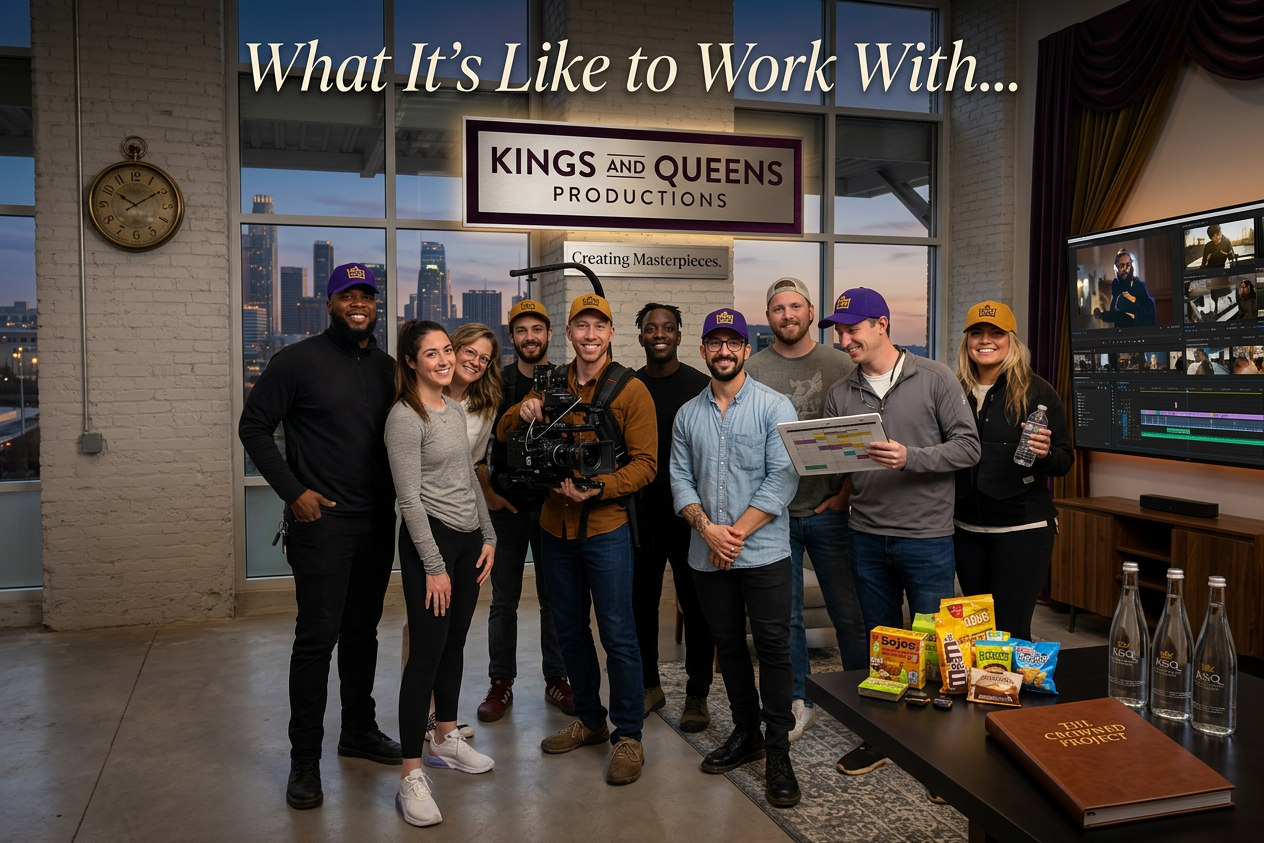
What It’s Like to Work With a Production Team (And Why It Matters)
What It’s Like to Work With a Production Team (And Why It Matters)
When brands think about video production, they often focus on the output.
The visuals. The edit. The final deliverable.
But the real difference in quality usually comes from something less visible:
The process of working together.
It Starts With Alignment
On a project like Original Grain x Jack Daniel’s, there are multiple moving parts:
Brand expectations
Creative direction
Production logistics
Execution on set
Without alignment, those elements can easily pull in different directions.
That’s why the first priority isn’t production—it’s clarity.
What are we making?
Who is it for?
What should it feel like?
When those questions are answered early, everything downstream improves.
Communication Drives Everything
Strong communication isn’t just about staying in touch.
It’s about:
Setting clear expectations
Making decisions efficiently
Keeping everyone on the same page
During production, this becomes critical.
Small adjustments happen constantly—lighting changes, product positioning, pacing decisions.
Without clear communication, those adjustments slow things down.
With it, they become part of a smooth, collaborative flow.
Collaboration Over Control
The best commercial work doesn’t come from one person.
It comes from a team:
The brand bringing insight and vision
The production team translating that into visuals
The crew executing at a high level
On set, this looks like:
Reviewing shots together
Making quick decisions as a team
Adjusting based on what’s working in real time
It’s not rigid—it’s responsive.
Why This Matters for the Final Product
When collaboration is strong:
The shoot runs more efficiently
Creative decisions feel intentional
The final video reflects the brand accurately
When it’s not, even good footage can feel disconnected.
The Reality Behind Strong Production Work
The best productions don’t feel complicated.
They feel smooth.
That’s not by accident—it’s the result of:
Clear expectations
Strong communication
Aligned creative direction
Final Thought
If you’re investing in commercial video, you’re not just hiring a production team.
You’re choosing a process.
And the quality of that process will always show up in the final result.

The Challenges You Don’t See: Original Grain x Jack Daniel’s Shoot
The Challenges You Don’t See: Original Grain x Jack Daniel’s Shoot
Most people assume production challenges are big, obvious issues.
Bad weather. Missed schedules. Equipment problems.
But in commercial product work, the real challenges are much smaller —
and much more important.
The Challenge: Precision at a Micro Level
On this Original Grain x Jack Daniel’s shoot, the challenges weren’t dramatic.
They were subtle:
Reflections slightly off in the glass or watch face
Light not fully bringing out the wood grain
Angles that didn’t capture the craftsmanship correctly
And when you’re working with a product made from authentic whiskey barrels, those details aren’t optional — they’re the story.
Why Small Problems Matter More in Product Work
Unlike lifestyle or narrative content, product work has nowhere to hide.
The frame is controlled.
The subject is isolated.
So every imperfection becomes visible:
A bad reflection
A flat highlight
A missed texture
That’s why precision matters more than speed.
The Solution: Constant Adjustment
Solving these problems isn’t about one big fix.
It’s about iteration.
On this shoot, that meant:
Repositioning lights multiple times
Rotating the watch by small degrees
Adjusting camera angles to control reflections
Tweaking intensity and contrast
Over and over again.
The Reality of Professional Production
This is what most people don’t see:
The final shot might take seconds on screen —
but it can take hours of refinement to get right.
Because great product imagery isn’t captured.
It’s built.
Why This Matters for Brands
If you’re investing in commercial video, you’re not just paying for a shoot.
You’re investing in:
Problem-solving
Attention to detail
A team that knows how to adjust in real time
That’s what separates average content from work that actually feels premium.
Final Thought
The difference in high-end production isn’t avoiding problems.
It’s how you handle them.
Because the smallest details are usually the ones that matter most.