
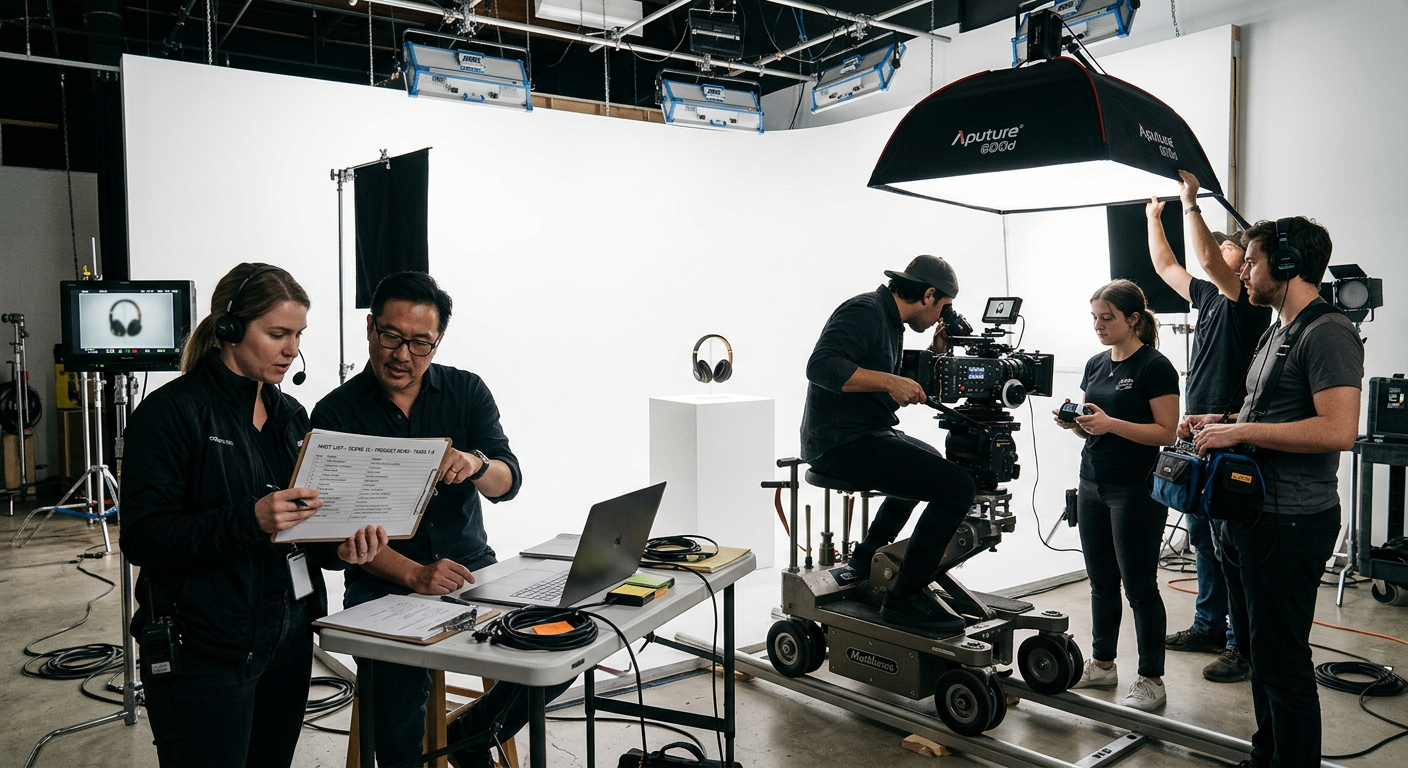
Why We Use Shot Lists on Every Production
Why We Use Shot Lists on Every Production
Professional video production requires structure.
What Is a Shot List?
A shot list outlines every planned camera setup for the day.
Why It Matters
Shot lists:
Reduce wasted time
Ensure coverage
Keep production aligned with the story
Protect the editing process
Structure Improves Creativity
Clear planning allows directors and DPs to focus on performance and visuals.

How We Direct Non-Actors on Camera
How We Direct Non-Actors on Camera
Not every commercial video uses professional actors. In fact, many brand videos feature real team members.
Not every commercial video uses professional actors. In fact, many brand videos feature real team members.
Create Comfort First
The goal is not theatrical performance — it’s authenticity.
We use:
Prompt-based questions
Short takes
Conversational tone
Structure Builds Confidence
Breaking scripts into sections reduces pressure and improves delivery.
Authenticity Converts
Audiences respond to genuine communication more than scripted perfection.
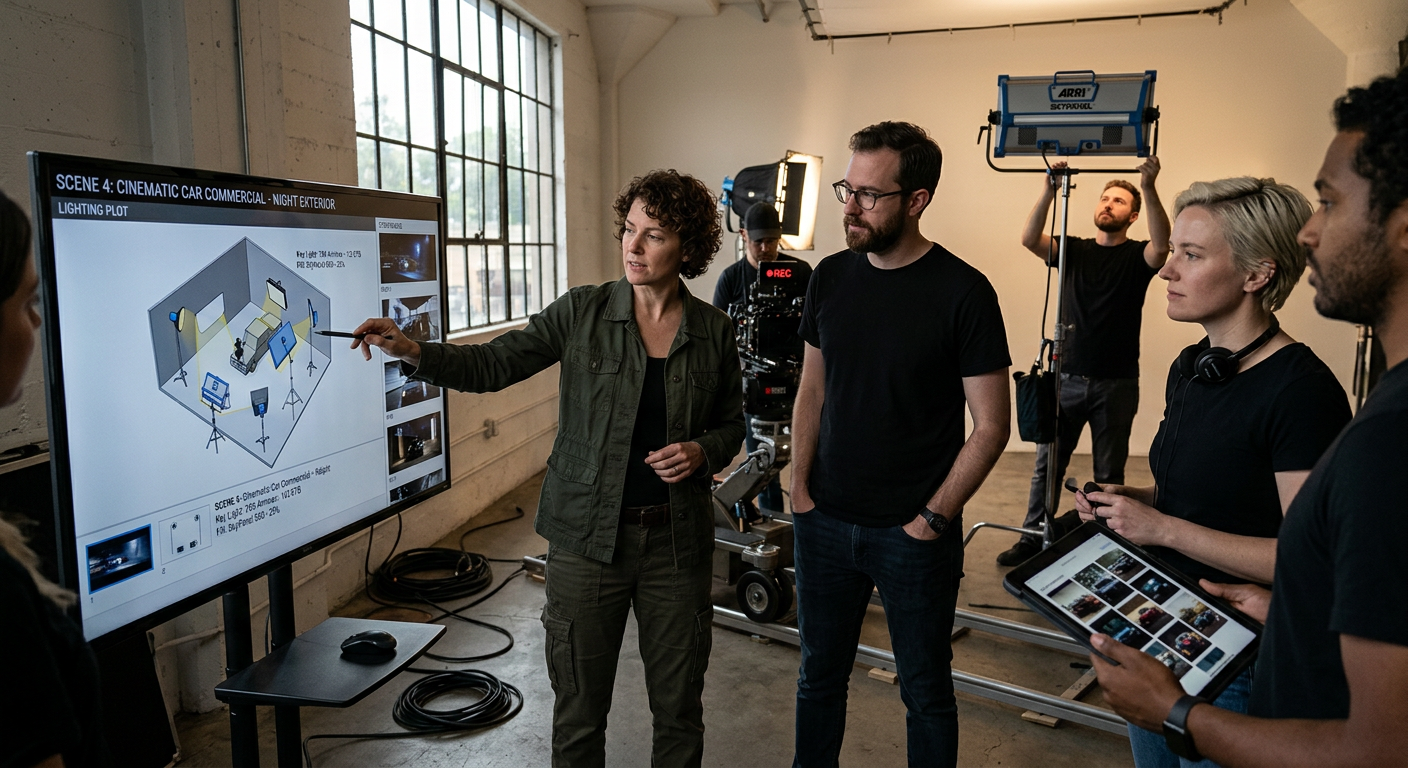
How We Plan Lighting for Cinematic Commercials
How We Plan Lighting for Cinematic Commercials
Lighting is one of the most powerful storytelling tools in commercial video production.
Lighting Shapes Brand Perception
Different lighting styles communicate different emotions:
Warm light = welcoming, lifestyle, hospitality
Cool light = modern, clean, tech-focused
High contrast = dramatic
Soft light = natural and approachable
Lighting Is Planned in Pre-Production
Professional lighting design considers:
Location layout
Time of day
Natural light sources
Power access
Camera movement
Why It Matters
Lighting separates amateur footage from cinematic storytelling.
Intentional lighting elevates brand perception.
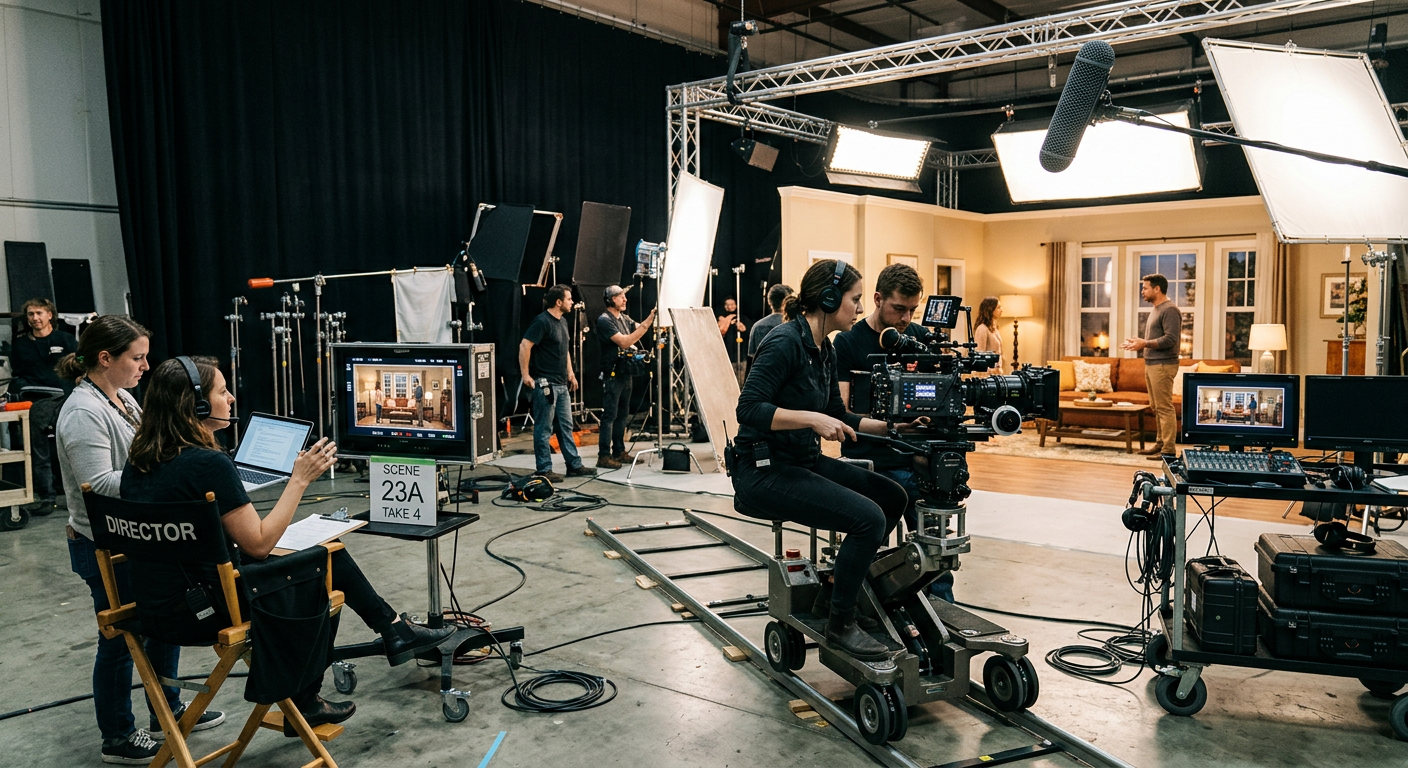
What a Real Commercial Shoot Day Looks Like
What a Real Commercial Shoot Day Looks Like
When viewers watch a 60-second commercial, they rarely consider what it took to create it.
Behind every finished video is a structured, carefully executed production day.
The Day Starts Before Cameras Roll
Commercial shoot days typically begin with:
Crew call and equipment unload
Lighting and audio setup
Final schedule review
Blocking and rehearsals
Preparation ensures efficiency.
Defined Roles Create Efficiency
On a professional commercial set:
The Producer manages logistics and schedule.
The Director guides performance and storytelling.
The Director of Photography shapes lighting and visuals.
Clear roles prevent confusion.
Why Structure Matters
Strong pre-production allows shoot days to run:
On schedule
On budget
With creative clarity
The smoother the day feels, the more preparation went into it.